

Lessons from Lola: Reflections on Christian Discipleship
Part One. Sit. Stay. Follow.
Back in February, my family gained a new member, Lola the Cavoodle.
I was convinced we'd thought through the impact a new puppy would have on our lives. But, as it turns out, getting a puppy is remarkably like bringing home a new baby. The feeding, walking, training, cleaning up accidents and, of course, endless cuddling quickly fill your days in ways you can never quite anticipate.
Over the months, I've found myself reflecting on how similar dog training is to Christian discipleship.
At the same time, my family and I have been hosting fortnightly dessert and Bible studies, with a couple who are new to Christianity. We've been working through a simple Discovery Bible Study together. In our living room, they've opened the Scriptures for the first time and attempted their first stumbling prayers. It has been a delight to watch.
There's something profoundly encouraging about seeing someone take their first steps as a follower of Jesus. It has reminded me that discipleship is often much simpler than we make it. At its heart, discipleship is one person helping another person learn how to follow Jesus.
Over the next few posts, I'd like to share a few reflections on Christian discipleship that have emerged from these two seemingly unrelated experiences.
Watching our friends begin this journey has also raised a question for me: how does that kind of change actually happen?
Oddly enough, that's where our puppy comes in.
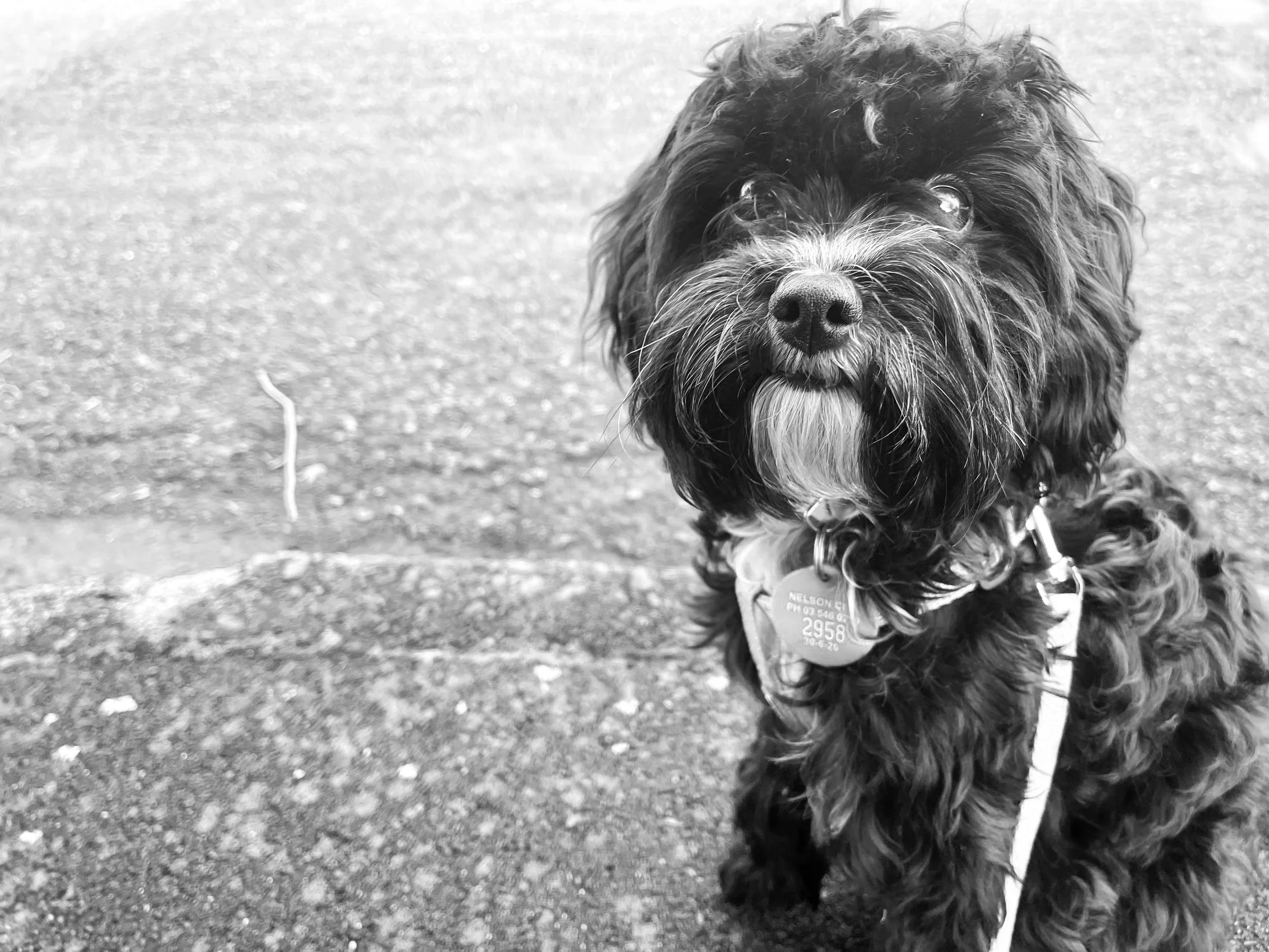
“Who’s a clever girl?”
Discipleship Doesn't Happen by Accident
The more time I've spent training Lola, the more parallels I've noticed.
A well-trained dog and a mature disciple have something important in common: neither got there by accident.
No dog trains itself.
No disciple disciples themselves.
A puppy doesn't wake up one morning and decide that from now on it will walk calmly on a lead, come when called, ignore distractions, and stop stealing food from the kitchen bench. Left to itself, it simply follows its instincts.
The same is true of Christian formation.
People don't naturally drift towards costly obedience, forgiveness, generosity, prayer, or holiness. Left to ourselves, we tend to follow our instincts. We arrange life around our own desires, preferences, and priorities.
Yet becoming a disciple of Jesus involves far more than adding a few spiritual habits to an otherwise unchanged life. It means gradually adopting an entirely different way of seeing the world. Jesus moves from the edge of our worldview to the very centre of it.
That kind of change doesn't happen overnight.
Nor does it happen accidentally.
In Pathways, Ken Morgan writes,
“Faith then is at least in part the belief that God loves me and knows what's best for me, so I'll do as he commands (or I’ll seek to live life according to my best understanding of his character), even when all of my instincts point the other way.”
This is a beautiful definition, but it also highlights why discipleship is difficult.
Repentance is profoundly counterintuitive.
Nobody naturally enjoys admitting they are wrong. Nobody instinctively chooses the narrow path. Nobody wakes up eager to surrender cherished habits, ambitions, or assumptions.
The Christian life is, in many ways, a lifelong process of learning to trust Jesus more than our instincts.
The Problem Is Hard to See
It is an unsurprising fact that puppies are poorly trained.
What is perhaps more surprising is that no puppy seems particularly bothered by this fact.
Lola has never once expressed concern about her lead manners. She has never apologised for becoming distracted. She has never reflected on her tendency to forget everything she's been taught the moment another dog appears.
As far as I can tell, she thinks she's doing just fine.
Which made me wonder whether something similar can happen in Christian discipleship.
It is very unlikely that many people in our churches would describe themselves as poorly discipled. More often, we look at Christians who pray regularly, read Scripture consistently, serve sacrificially, or attend church every week and think, "You can if you like."
Or perhaps, "What a bunch of hard outs!”
Without realising it, we can quietly redefine mature discipleship as an optional extra rather than the normal Christian life.
Perhaps this is one reason discipleship can be so easily neglected.
If people don't recognise the gap between where they are and what Jesus is inviting them into, why would they seek change?
And if churches assume discipleship will happen naturally over time, why would they think intentionally about how it occurs?
Watching our friends discover Scripture and prayer has reminded me that discipleship is neither automatic nor accidental. It is the slow work of learning to trust Jesus more than our instincts.
No dog trains itself.
No disciple disciples themselves.
Next month, I'll explore a second lesson from Lola: what dog training can teach us about guidance, growth, and why following Jesus is rarely a solo endeavour.
Like what you’re reading?
This blog will always be free to read – but if you do want to chip in…